
An in-house annotation platform built to power the AI roadmap
The company's AI programs ran on CVAT and outsourced tools. I designed the platform that replaced them — unifying the entire annotation lifecycle into one owned, enterprise-grade product.
My role wasn't to make the call. It was to define what it had to produce.
Leadership decided to invest in-house — to own a core capability and remove a pipeline dependency. From there, two obvious paths sat on the table. Neither survived the question underneath them.
Bolts operational capability onto an annotation-first architecture. You patch the gaps and inherit the single-generic-user model anyway.
Trades one external dependency for another — and defeats the entire ownership rationale that started the project.
The problems weren't annotation problems — they were platform problems, living between tools and between roles, where no better canvas can reach.
Every feature traces back to something observed
The only designer, owning the experience end to end
I framed the problem and shipped the build. I partnered with the PM on scope and priorities, made the structural calls — the role model, the IA, the lifecycle flow — and stayed embedded with the two engineers through implementation. I led the design direction; I did not manage other designers.
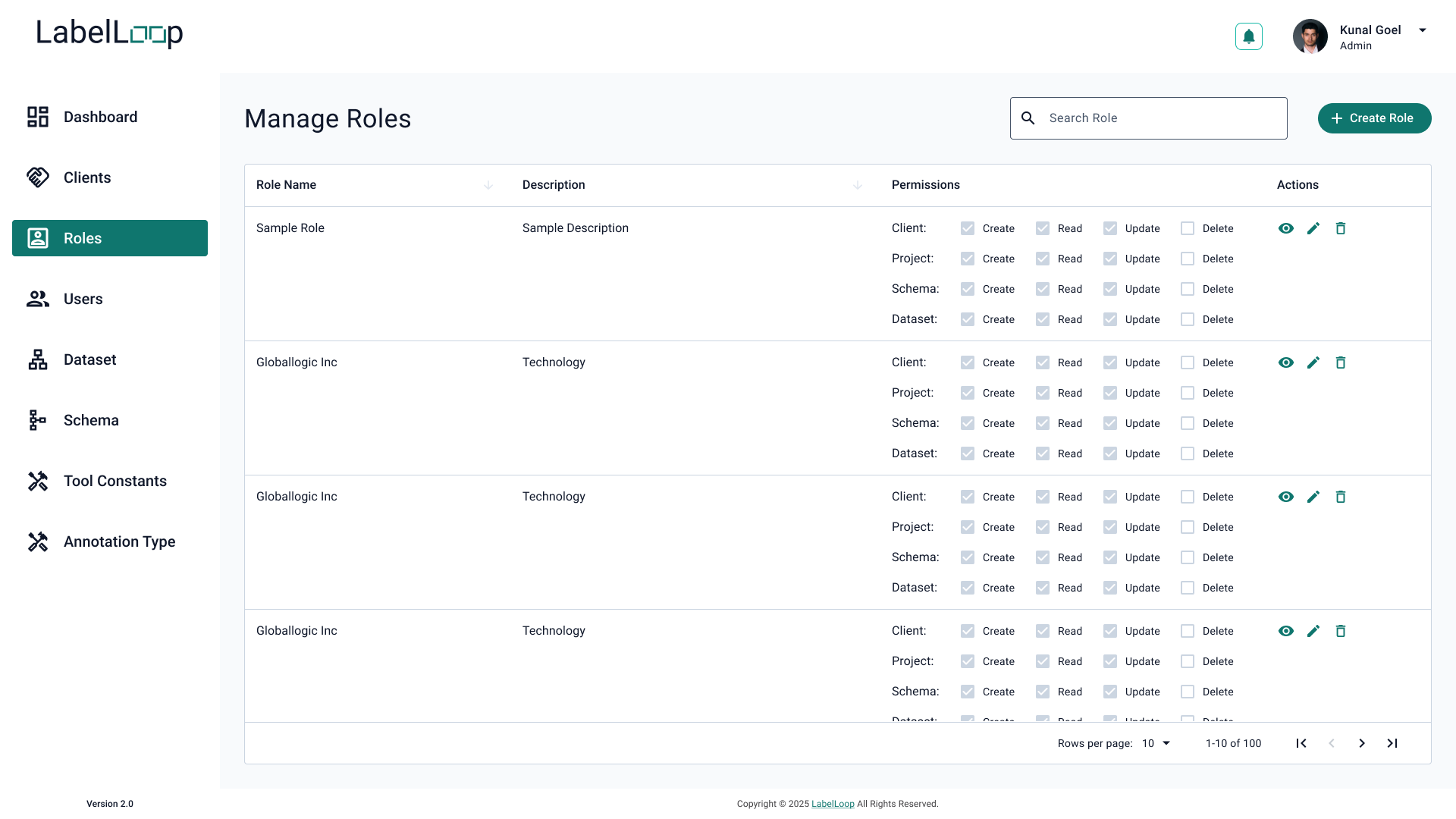
Four roles. One platform. Four workspaces.
One generic interface couldn't serve these roles. Role clarity had to be built into the foundation — so each role gets its own workspace, navigation, and permissions.
No research budget. A six-month clock. The workflow as the artifact.
I grounded discovery in the real workflow — walking the CVAT process step by step, PM discussions on constraints, direct annotator conversations, and a review of live-project bottlenecks. Not formal research, but enough to map the lifecycle honestly. Everything pointed at one structural problem.
Fragmentation across tools and roles was the recurring theme in every conversation.
The design problem became consolidation with role clarity — one platform, four workspaces.
What I chose — and what I consciously chose not to do
Every trade-off names the constraint, the call I made, and the thing I deliberately deferred. Read the ⊘ lines on their own to see where the scope lines were drawn.
Timeline vs. research
Small team vs. breadth
Multiple roles vs. simplicity
Flexibility vs. governance
Scalability vs. speed
Enterprise complexity vs. focus
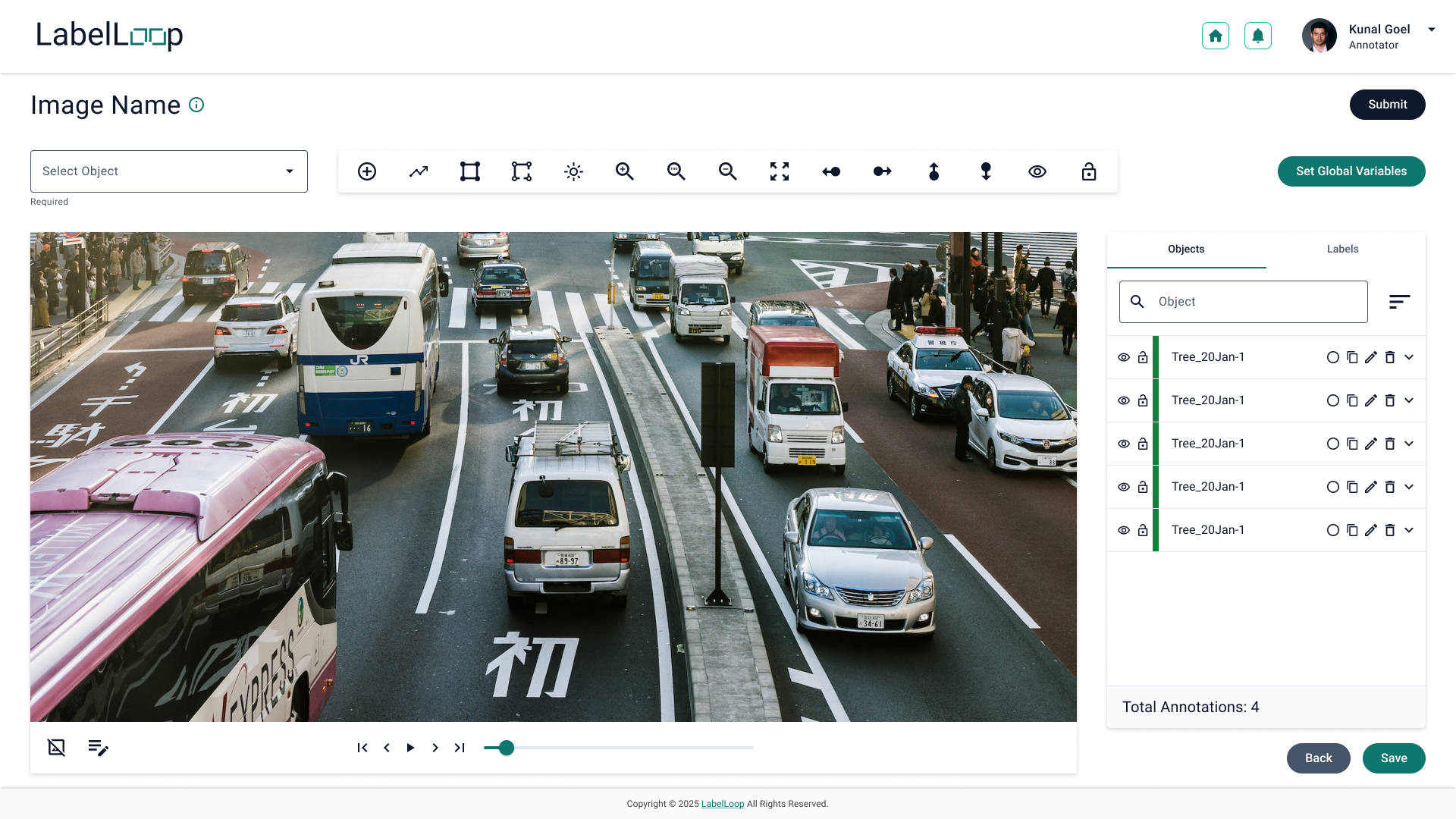
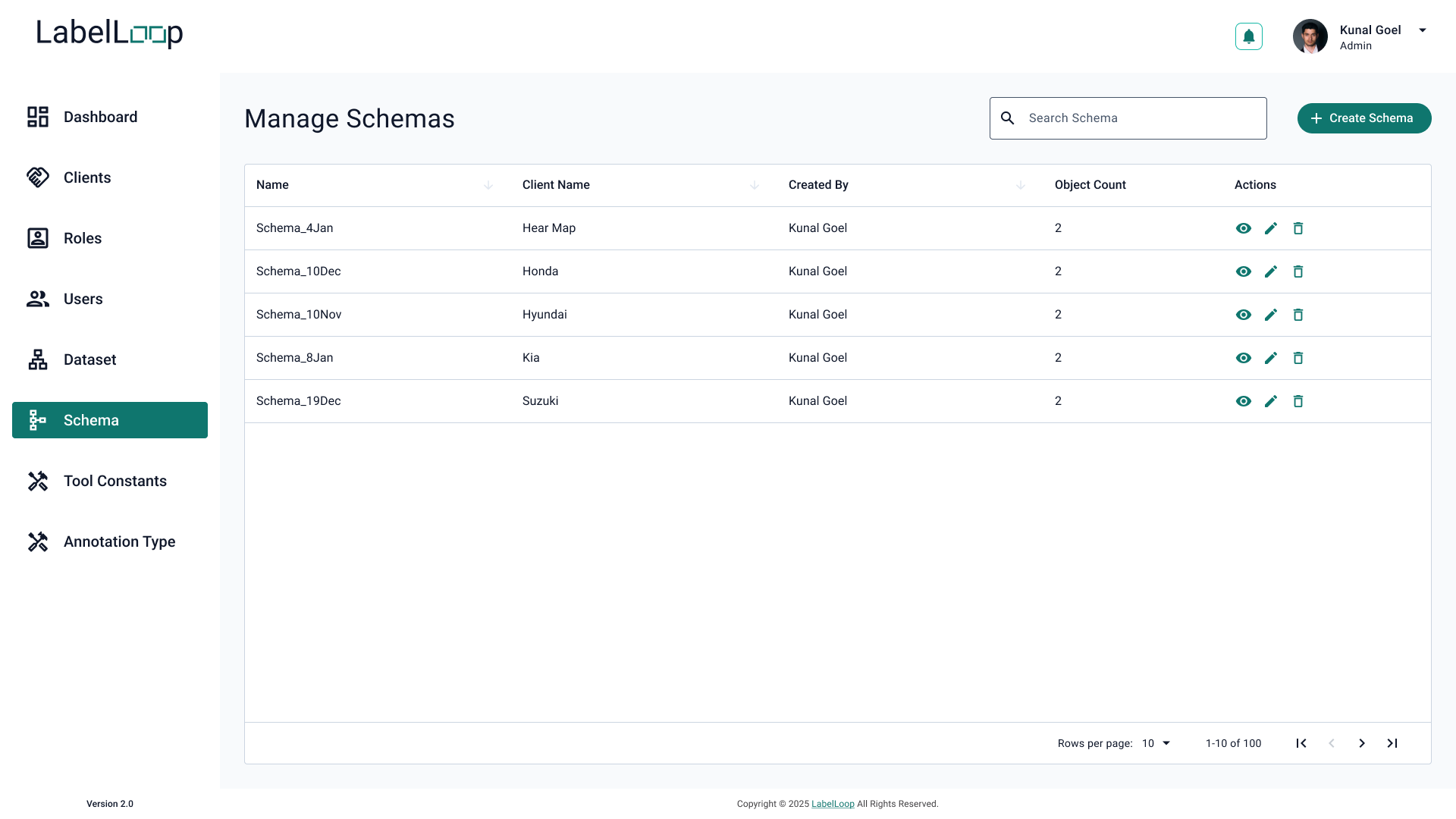
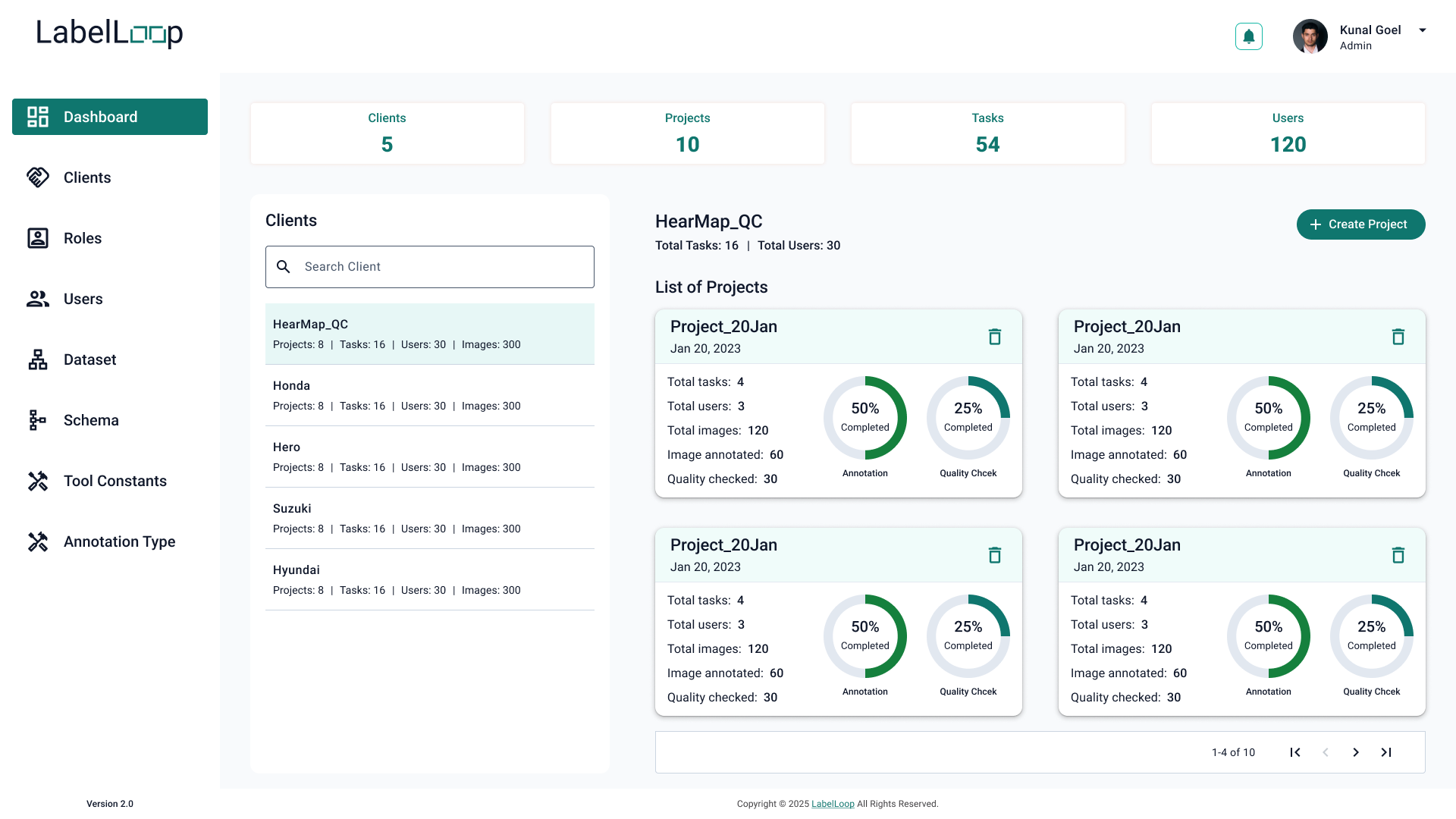
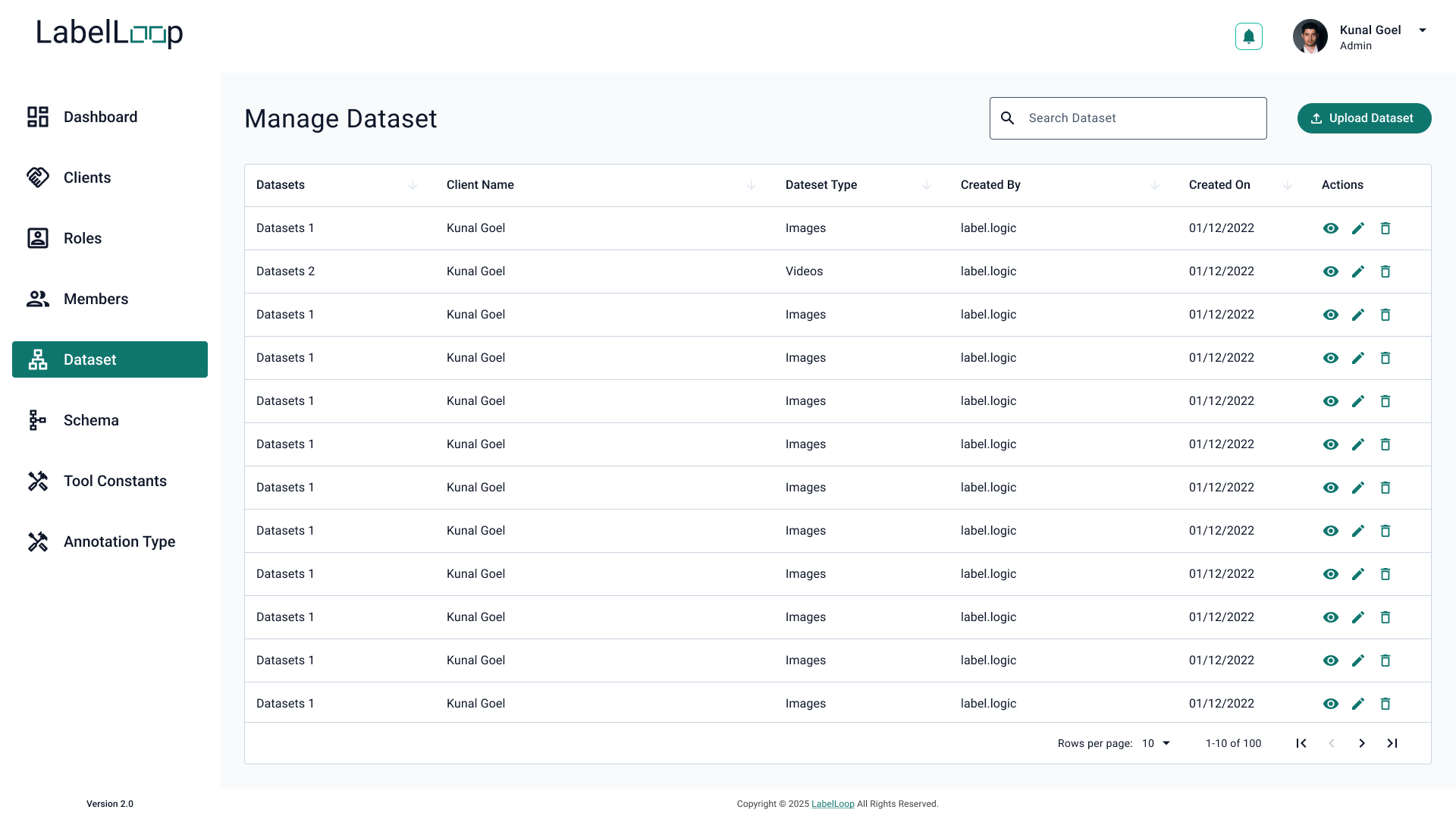
The platform, at a glance
Click any screen to zoom in for detail
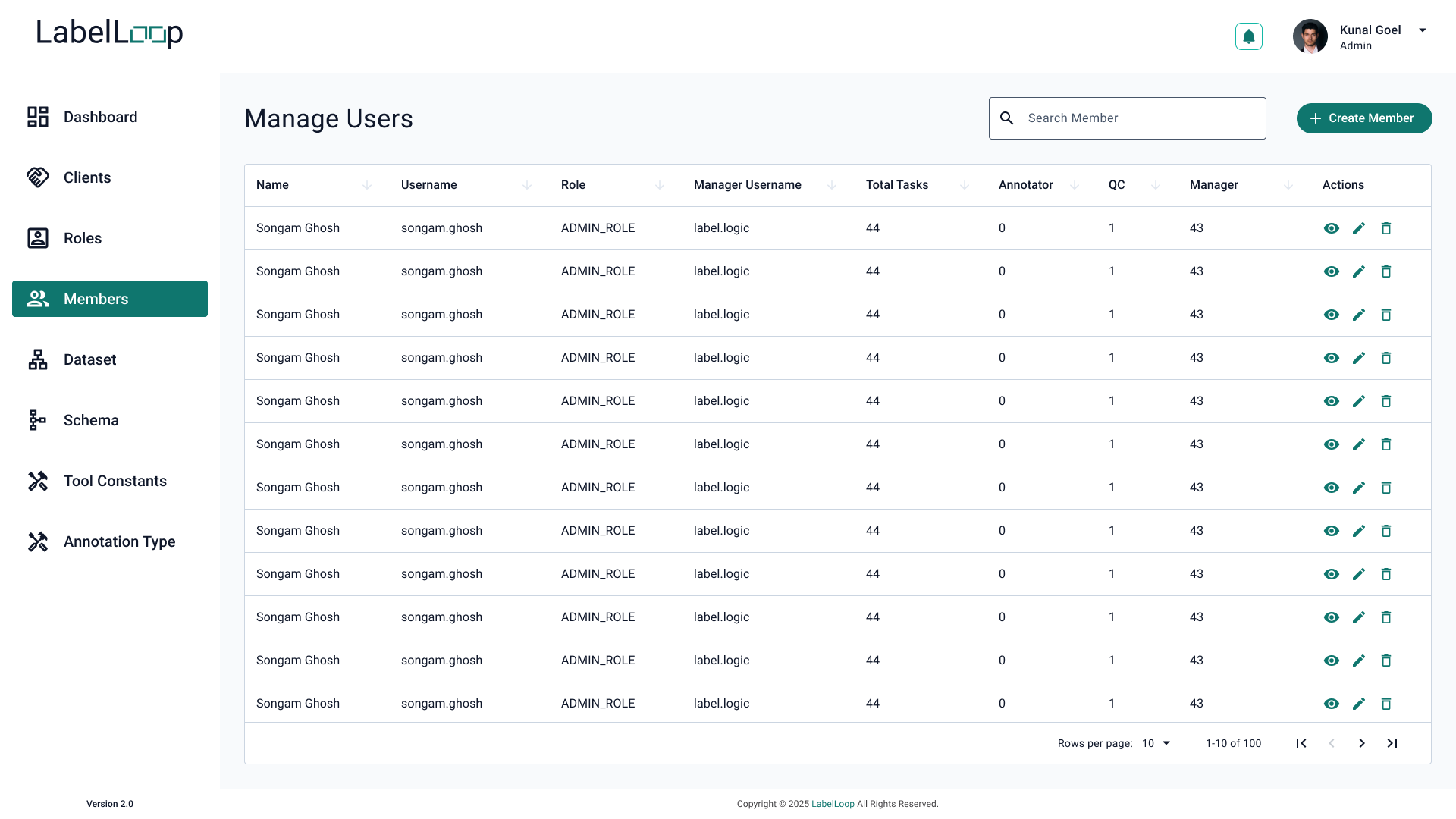
A system built for leverage, not decoration
Shared color and text variables plus reusable components for the repeating data-dense patterns. The payoff is leverage: set a pattern once, and engineers ship consistent, correct UI without me on every screen.
A system was the only way to build an enterprise product this fast — and it kept the product coherent across modules built quickly, and extensible for future AI products.
Good craft follows from good architecture
I came in thinking like a screen designer — that a great product is a sequence of well-crafted interfaces. LabelLoop taught me that at enterprise scale the interface is almost the last thing that matters. The decisions that carried it were structural: the role model, the IA, making the whole lifecycle visible and traceable. Get those right and the screens almost design themselves.
It also changed how I think about constraints — a five-person team and six months forced the clarity, pushing me to design a system rather than a pile of screens, and to make product decisions, not just design ones. I left a different kind of designer: one who starts from the business problem and the underlying structure, and trusts that good craft follows from good architecture.